An Introduction
About Osteopathy
Where this approach comes from, how hands-on treatment works, and an explanation of terminology.
A Short History
Where Osteopathy comes from
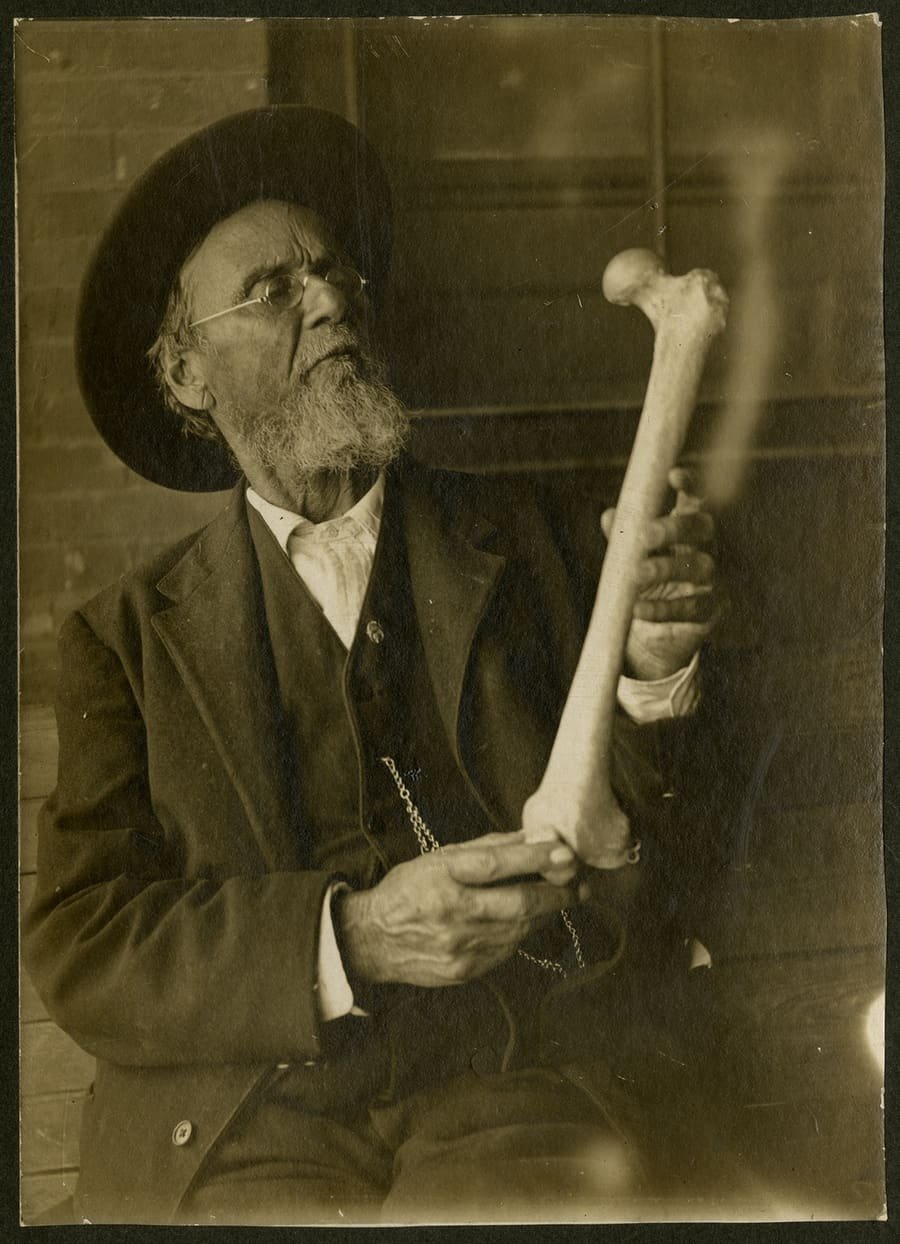
Osteopathy began with Andrew Taylor Still, MD, a physician on the Missouri frontier. After three of his children died of spinal meningitis in 1864 — with the best medicine of the era helpless to save them — he lost faith in the drugs of his day and spent years searching for a more reliable foundation for medicine. He found it in anatomy.
His conclusion: the body is a self-regulating, self-healing whole. When its structure — bones, muscles, fascia, and the vessels and nerves that run through them — moves as anatomy intends, health tends to follow. When structure is restricted, function suffers. Still learned to find those restrictions with his hands and treat them, named the approach Osteopathy in 1874, and opened the first osteopathic medical school in Kirksville, Missouri in 1892.
“The object of the doctor should be to find health; anyone can find disease.”
— A.T. Still
Today, Doctors of Osteopathic Medicine are fully licensed physicians who practice in every specialty. Most use their hands-on training sparingly, if at all; a small number specialize in Osteopathic Manipulative Medicine (OMM), the hands-on diagnosis and treatment that is the heart of traditional Osteopathy. Rather than suppressing symptoms, we look for the root cause.
The Approach
How hands-on treatment works
The osteopath’s instrument is a trained sense of touch. During an exam, Dr. Dubey feels how your body moves — joint by joint, tissue by tissue — looking for places where healthy motion has been lost: a compressed joint, tissue that no longer glides, an old injury the body has been compensating for.
Treatment continues directly from there. Using gentle pressure and careful positioning — nothing forced — he helps those areas release and regain their motion. You stay fully clothed, and most people find the work deeply relaxing.
The point is not to chase symptoms but to remove the structural obstacles in the way of change and healing. Once motion returns, circulation, nerve function, and the body’s own healing follow. That is also why treatment doesn’t always happen where it hurts: headaches may call for work on the neck or ribs, and back pain may trace to an ankle sprain that never fully recovered.
The Vocabulary
Terms you’ll come across
Osteopathy comes with a small vocabulary of overlapping terms. Here is what each one means.
DO
Doctor of Osteopathic Medicine
A fully licensed physician. DOs complete the same medical education, board exams, and residency training as MDs, plus several hundred additional hours of training in hands-on diagnosis and treatment. They prescribe medication, perform surgery, and practice in every specialty.
OMM
Osteopathic manipulative medicine
The medical discipline of diagnosing and treating with the hands — the anatomy, the clinical reasoning, and the manual techniques together. A practice that specializes in OMM is one where hands-on work is the medicine itself, not an add-on to it.
OMT
Osteopathic manipulative treatment
The treatment itself — what actually happens on the table. OMT is the term you’ll see on receipts and insurance paperwork. In everyday use, OMM and OMT are nearly interchangeable: OMM is the discipline, OMT the treatment.
Somatic dysfunction
What the osteopath finds and treats
The formal diagnosis for a place where the body’s framework — joints, muscles, fascia, and their related nerves, vessels, and fluids — is restricted or working poorly. It’s the term you’ll most often see on an osteopathic superbill.
Cranial osteopathy
aka Osteopathy in the cranial field
A refinement developed by William Sutherland, DO that uses very light touch to work with the body’s subtle inherent motion. Despite the name, it is not limited to the head — and it is gentle enough for newborns.
Traditional Osteopathy
The original approach
Osteopathy practiced the way Still taught it: whole-person diagnosis and treatment done primarily with the hands. The word “traditional” distinguishes this kind of practice from the majority of DOs, who work as conventional physicians.
The Practice
Osteopathy at Stillwater
Stillwater Osteopathic Medicine is the practice of Jared Dubey, DO — an osteopathic physician board certified in Family Medicine and Osteopathic Manipulative Treatment. Traditional Osteopathy forms the foundation for clinical assessment and treatment in Dr. Dubey's practice.
Additionally, Dr. Dubey applies his background in integrative medicine and primary care to provide a comprehensive evaluation and may order labs and/or imaging studies when indicated. Every patient is treated with hands-on osteopathic manipulative treatment and Dr. Dubey often also makes exercise recommendations and may provide nutritional guidance, recommend supplements, or prescribe medications.
Meet Dr. Dubey